

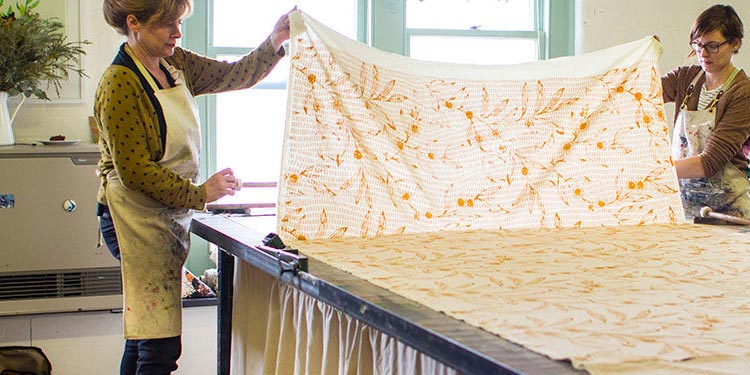
Screen Printinging on Textiles
Screen Printinging is a traditional and versatile textile printing technique that allows bold, vibrant, and long-lasting designs to be applied to a wide variety of fabrics. In this process, ink is pushed through a finely woven mesh screen onto the fabric in the areas defined by a stencil or design, producing sharp, consistent patterns with excellent color opacity. Screen Printinging works on natural fibers like cotton and linen, as well as synthetic fabrics such as polyester and blends, making it ideal for t-shirts, workwear, uniforms, home décor, and promotional textiles.
Key Advantages:
-
Vivid Colors: Achieves strong, bright, and durable colors that withstand repeated washing.
-
Versatility: Suitable for both small details and large, bold designs.
-
Durability: Ink penetrates the fabric surface, ensuring long-lasting prints that resist fading and cracking.
-
Cost-Effective for Bulk Runs: Especially economical for large production orders.
Screen Printinging can also be combined with special inks and effects, such as metallic, glow-in-the-dark, puff, or water-based inks, providing endless creative possibilities for designers. This method remains one of the most reliable and popular printing techniques in the textile industry, balancing quality, durability, and visual impact.
Screen Printinging on textiles is a versatile and durable method for applying vibrant designs to fabric, ideal for both mass production and custom apparel. It uses mesh screens and ink to transfer patterns with precision and bold color.
Here’s a comprehensive guide to help you understand and present Screen Printinging on textiles effectively:
️ What Is Screen Printinging?
- Definition: A printing technique where ink is pushed through a mesh screen onto fabric using a stencil.
- Also known as: Silk Screen Printinging.
- Key trait: Each color in the design requires a separate screen.
Process Overview
- Design Preparation: Artwork is separated by color and printed onto transparent sheets.
- Screen Creation: Mesh screens are coated with a light-sensitive emulsion and exposed to the design.
- Ink Application: Ink is pressed through the screen using a squeegee.
- Curing: Printed fabric is heat-cured to set the ink and ensure durability.MR Overview
Advantages of Screen Printinging
- Vibrant and opaque colors: Ideal for bold designs.
- Durability: Prints withstand multiple washes.
- Scalability: Cost-effective for large batches.
- Versatility: Works on cotton, polyester, blends, and more.
Limitations
- Setup time: Each color needs a separate screen.
- Not ideal for complex multicolor designs unless automated.
- Environmental concerns: Traditional inks and water usage can be high.
Applications
- T-shirts and hoodies
- Tote bags and accessories
- Uniforms and promotional items
- Home textiles like pillowcases and curtains
Eco-Friendly Options
- Water-based inks: Lower environmental impact.
- Discharge inks: Remove dye from fabric for soft prints.
- Automated presses: Reduce waste and improve consistency.
Would you like help writing product descriptions or setting up a Screen Printinging workflow for your textile business?